Roles
UI/UX Designer
Graphic Designer
Tools
Figma
Photoshop
Illustrator
Deliverables
UI Implementation
Component Library
Marketing Assets
Duration
12 weeks
Overview
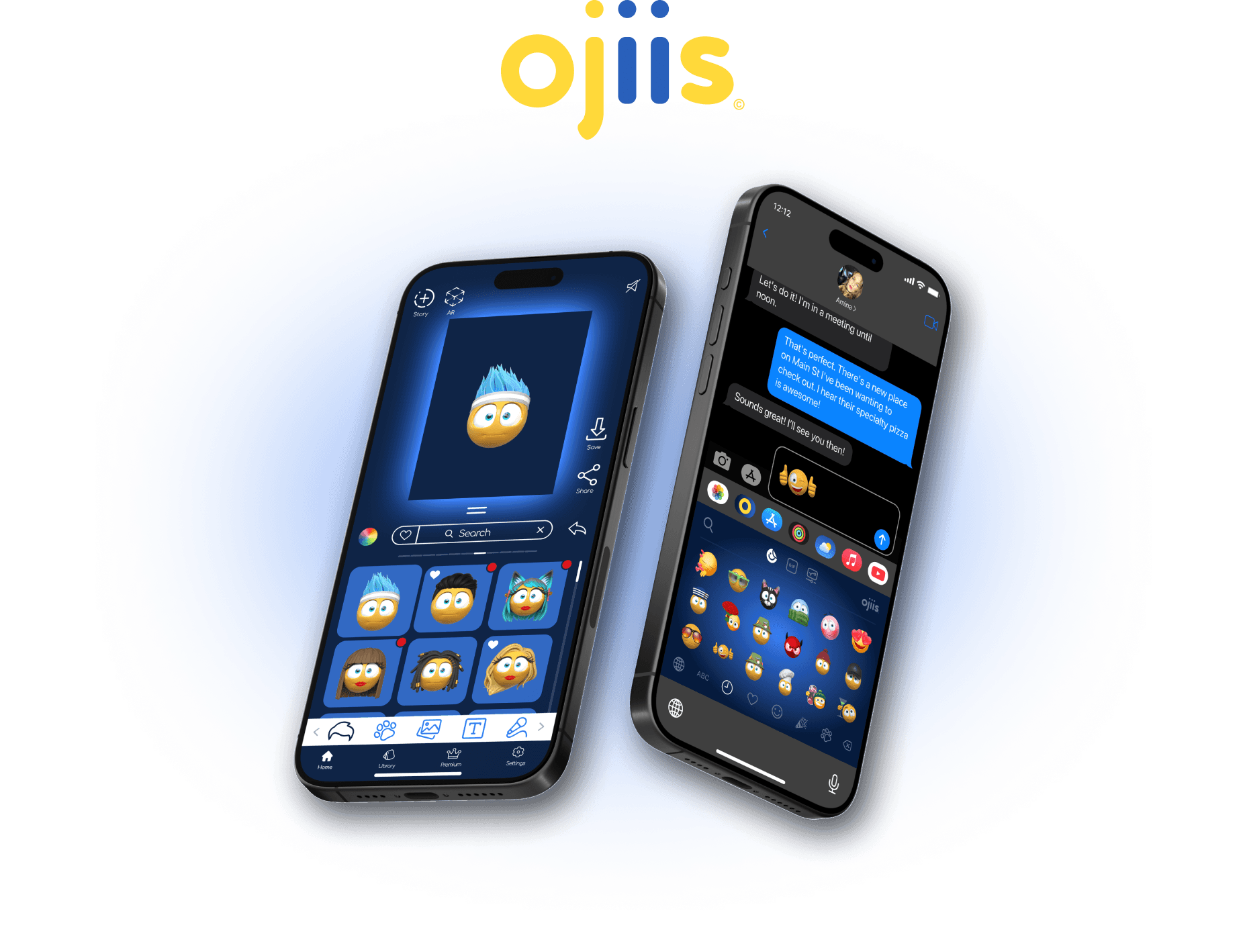
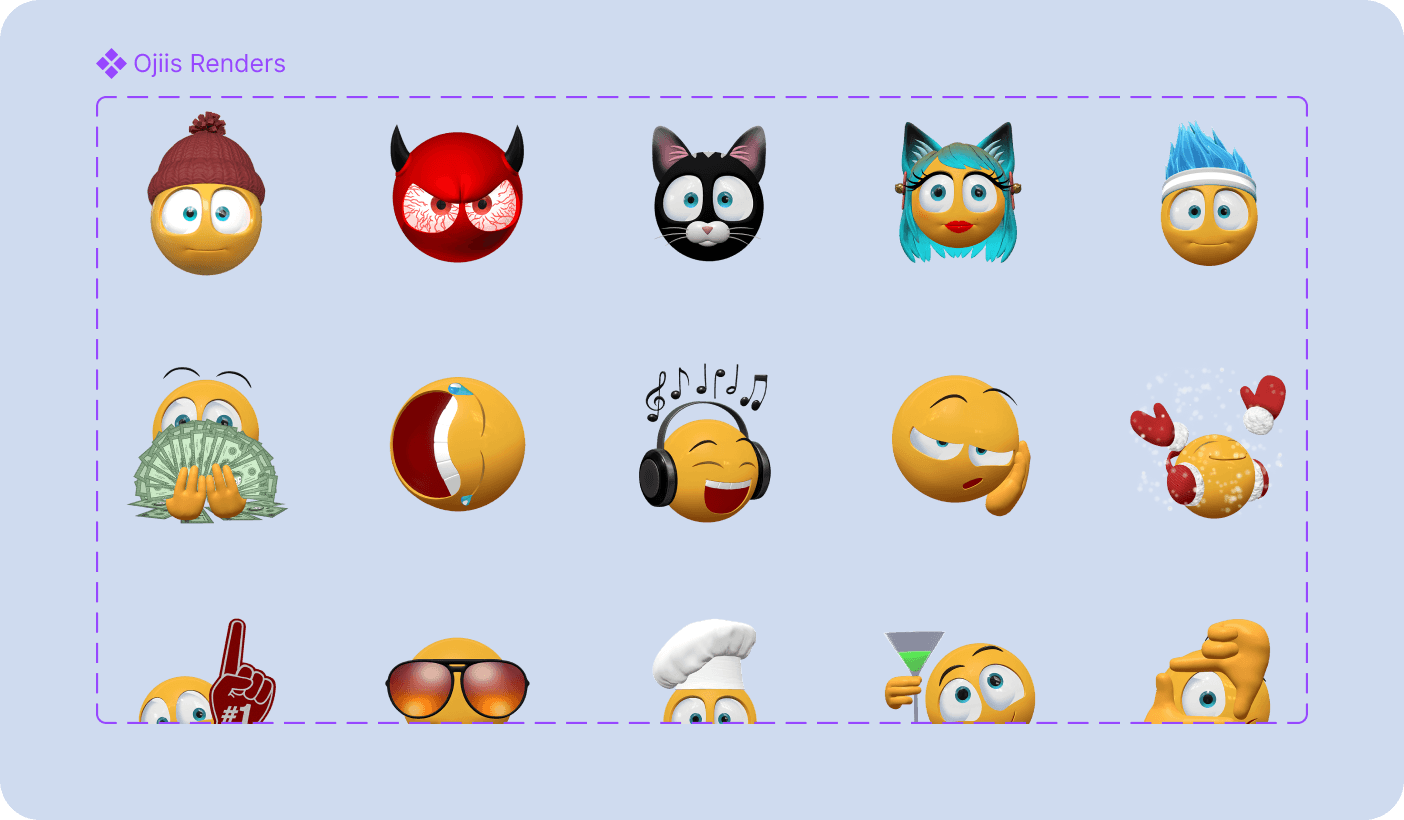
Ojiis is a custom emoji application designed to bring creativity and personality to your digital conversations.
My role was to transform static concept designs into fully scalable, high-fidelity Figma UI built with grids, components, and auto-layout. To support the app's launch, I also created marketing collateral, including a website and promotional visuals to showcase the app's functionality and unique features.
Project Challenges
Translating Static Designs
— Original concepts existed as flat image files with no structure.
Building for Scalability
— The interface needed to be reconstructed using auto layouts, reusable components and consistent spacing to support future changes and development.
Creating Brand Consistency
— The marketing website and storefront assets needed to extend the existing visual language of the Ojiis app.
UI Reconstruction
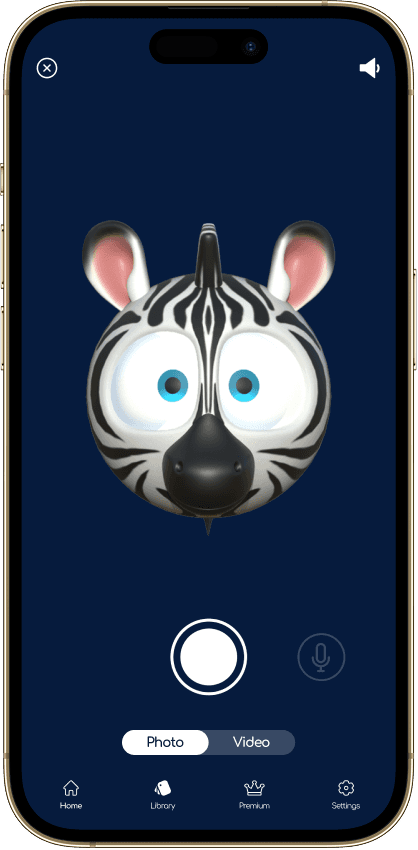
Each screen was rebuilt inside Figma using auto layouts, reusable components, and consistent spacing principles. While the visual appearance remained faithful to the original concepts, the underlying structure was completely reworked to create a cleaner, more scalable interface.

Static concept image
Figma UI


Website
To support the app's launch, a responsive marketing website was designed to introduce Ojiis, highlight its key features, and encourage downloads. The site extends the app's visual identity across desktop and mobile and provides a minimal, engaging overview of the product.


Store Listing Graphics
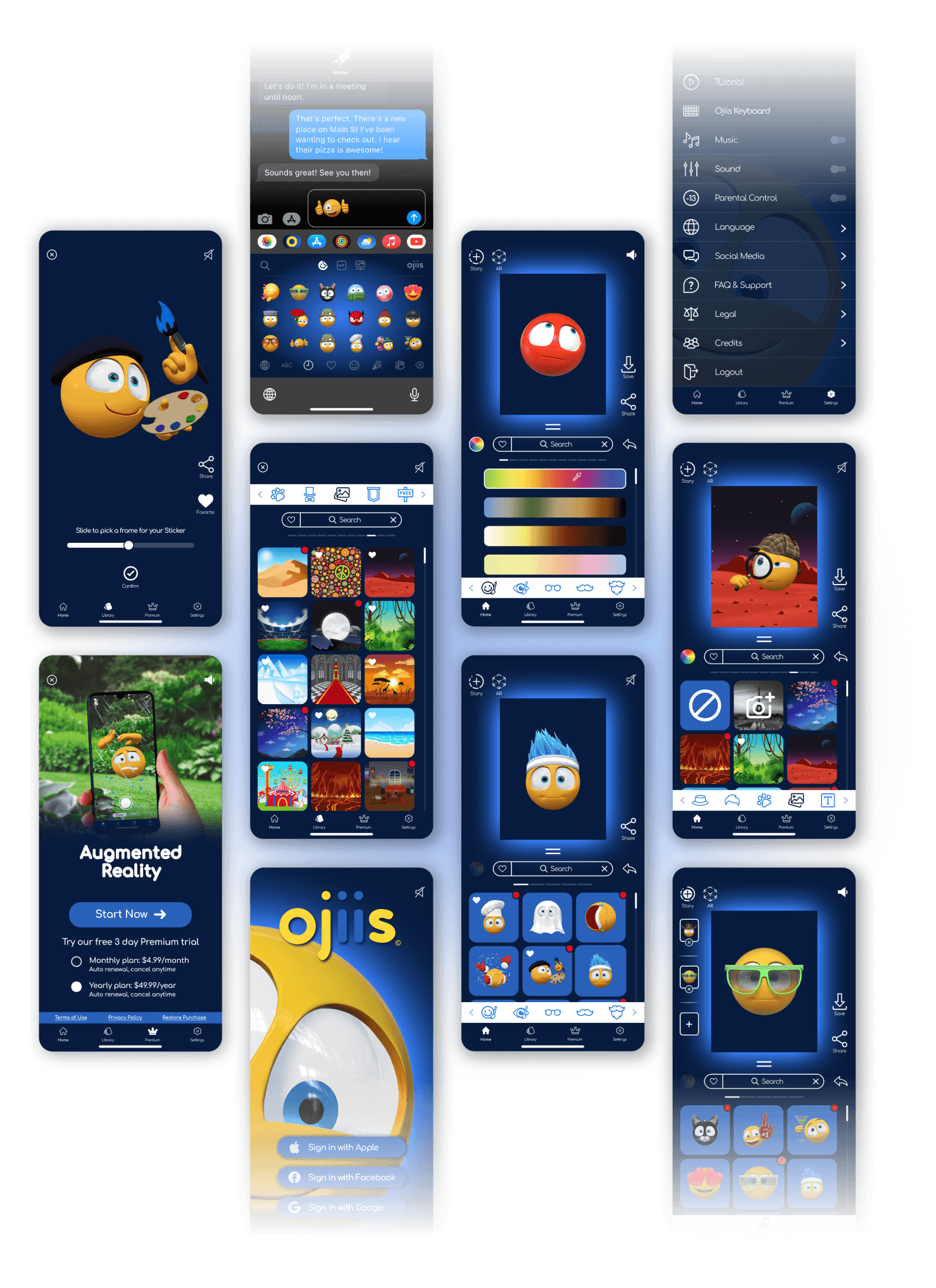
The store listing feature graphics for Ojiis showcase the app’s standout features through a continuous layout design spanning nine slides, creating a cohesive visual narrative throughout the carousel while maintaining the app’s vibrant, playful nature.


Outcome
Through structured UI implementation and supporting marketing design, the project evolved from a collection of static concept images into a full, scalable product.
The resulting interface is more consistent and maintainable, and provides a solid foundation for future development of the app and its supporting experiences.